Building with Muse: Dennis Wu's StackChan Robot Speaks Cantonese in His Own Voice
A Hong Kong maker put Meta's Muse inside a small white StackChan robot. It checks his calendar and email, understands Cantonese, and answers in a voice cloned…
 By Icarus2 min read
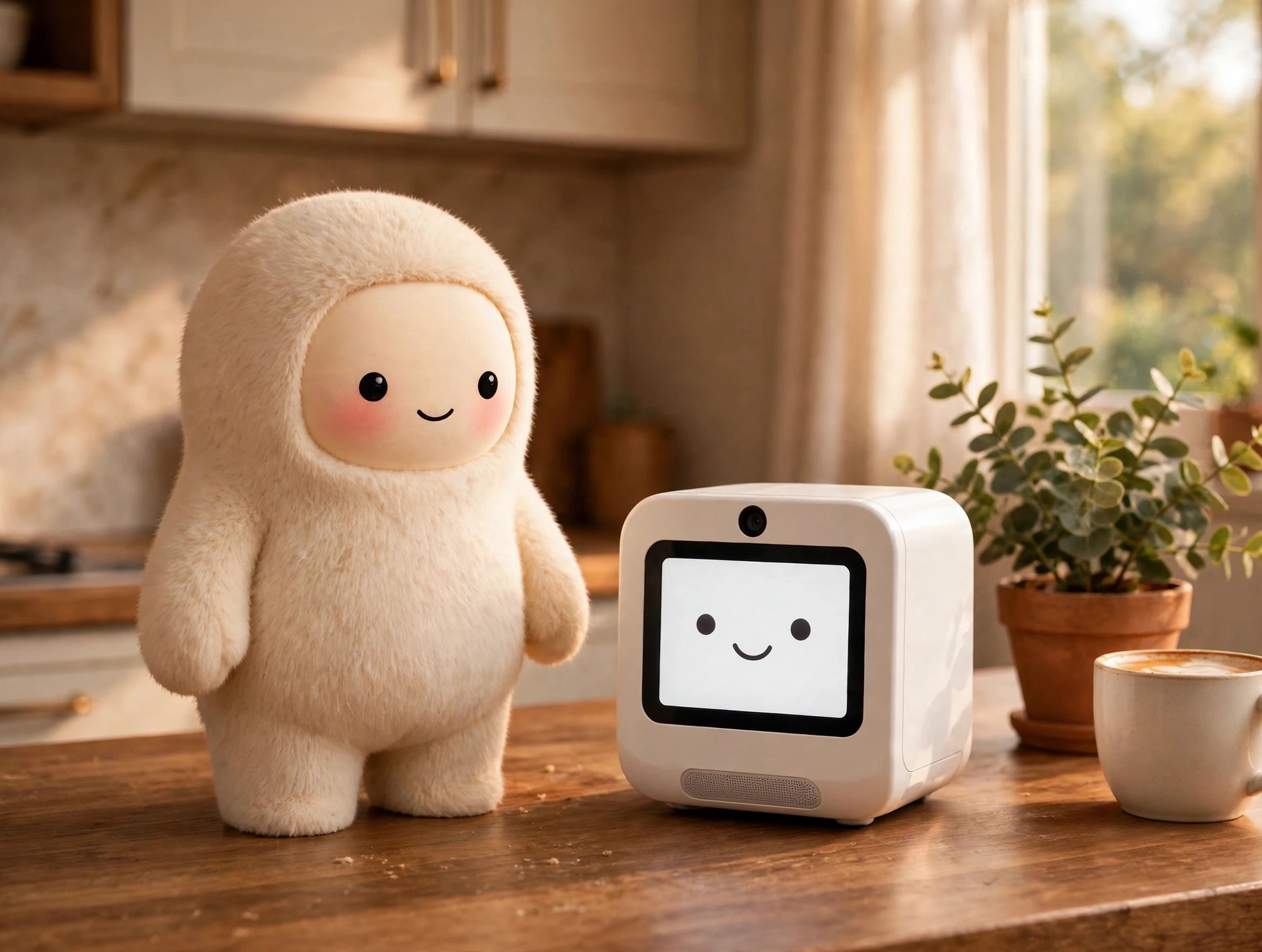
Dennis Wu built a small white robot that talks back in his own voice.
Wu, a maker in Hong Kong, posted a demo video to Threads on October 4 showing a StackChan desktop robot running Meta’s Muse. The robot is a white cube with a touchscreen face, and in the video Wu speaks to it in Cantonese. It answers in Cantonese, in a voice cloned from his own. The video has drawn more than 4,200 likes.
The demo is short and specific. Wu asks the robot to check his schedule, and it reports a Chess Class from 3:30 to 4:25 PM, with the rest of the day free. He asks it to check school emails from the past week, and it finds an October 2 newsletter with three things to follow up: a donation run next week, a parent education workshop registration, and an inter-school music festival registration deadline on October 11.
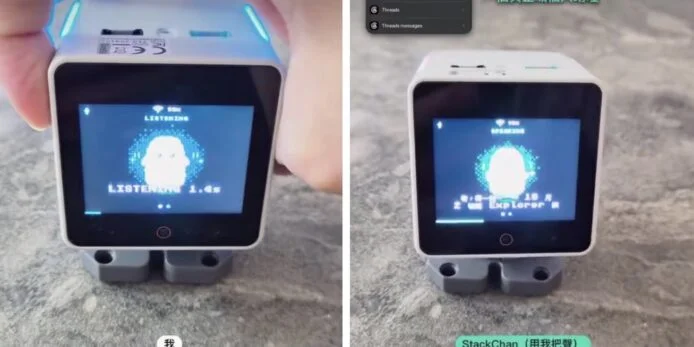
The setup runs on Meta’s open-source Gadgets toolkit, the same platform behind Sean Hollister’s $50 pendant. Voice goes through a proxy to speech-to-text, Muse handles the understanding, and replies come back through Google’s Gemini text-to-speech with voice replication. The robot’s screen flips between LISTENING and SPEAKING animations as it works, and shows Muse as connected to Gmail, Google Calendar, Facebook, Instagram, and Threads.
The voice is the part people talked about most. Gemini’s voice replication builds a clone from a 30-second audio sample, so the robot sounds like Wu himself. Google requires the voice owner’s consent for the recording, and the output carries a SynthID watermark marking it as AI-generated.
The robot itself is a StackChan, an open-source desktop robot built around an ESP32-S3 chip, with a 2-inch touchscreen, a camera, dual microphones, a speaker, and a head that turns. Wu says the setup does not require the exact robot, and that other ESP32 devices work too. He also says the process is a bit complicated, and has promised a tutorial if the response stays strong.
He is not selling it. Wu has a day job, treats the robot as a hobby, and shares the ideas for free. He previously used a similar robot to let his five-and-a-half-year-old daughter talk with AI, saying conversation beats handing a child a phone. Commenters on the video raised the privacy question that comes with the demo: linking real Gmail and social accounts to a hobby device carries credential risk. In replies, Wu notes that Muse has a free tier, while the Gemini voice service is paid.