
Muse Gadgets Brings Open-Source Hardware to the Muse Ecosystem
Alexandr Wang announced Muse Gadgets, an open-source ESP32 firmware and Linux SDK for building hardware that works with Muse.
 By Icarus3 min read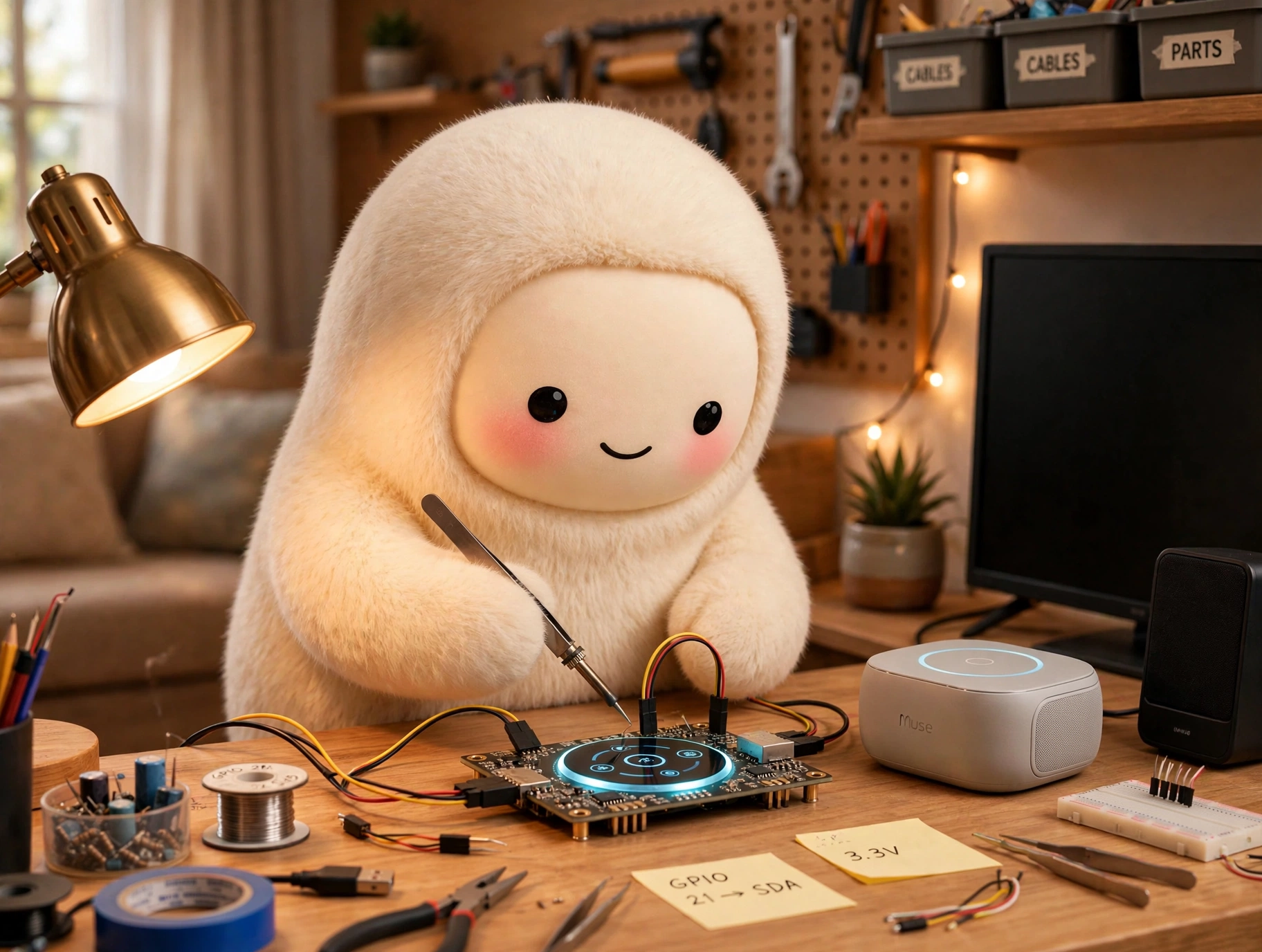
Muse Gadgets Brings Open-Source Hardware to the Muse Ecosystem
An open-source ESP32 firmware and Linux SDK let anyone build hardware that works with Muse, and a first-party smart-home device, Muse Home Link, is on the way.
Alexandr Wang announced Muse Gadgets on Friday in an X post, releasing the open-source ESP32 firmware and Linux SDK that let anyone build hardware that works with Muse.
Wang also said the team is releasing its own first-party device, Muse Home Link, meant to connect Muse with smart devices such as TVs and speakers.
What Builders Get
The program’s site, gadgets.muse.ai, describes the pitch: program an off-the-shelf ESP32 board or set up a Raspberry Pi with the SDKs, then connect Muse to displays, buttons, sensors, and actuators. The ESP32 device SDK covers adding a screen for images, audio input and output, and other sensors; the Linux device SDK turns a spare Raspberry Pi or Linux box into a gadget, with support for custom commands for chores like sysadmin work or a Home Assistant setup. The SDKs and firmware are open source under the Apache 2.0 license.
Getting started means grabbing an SDK token from gadgets.muse.ai. Wang’s suggested workflow, in a quote-post of Nat Friedman’s announcement thread: “Grab an API token from gadgets.muse.ai and point your favorite coding agent at the github repo to build your own.” The site also links a community Discord where builders can share projects.
Muse Home Link
Wang used the thread to describe the first-party device. “The muse home link is very chic,” he wrote, adding that the team made a batch of 5,000 units, expected to ship in a few weeks, and free for Muse subscribers while supplies last.
The Gadgets site separately lists a “Muse on your TV” HDMI stick as “coming soon,” alongside third-party example builds: a Raspberry Pi 5 tied to Home Assistant, a Waveshare round AMOLED touch screen, a Seeed reTerminal e-ink display, an M5Stack StickS3, and others. Those devices are made and sold by other companies.
Why It Matters
This gives Muse an official on-ramp to the physical world. Until now, working with Muse meant the app. Gadgets opens a sanctioned path for DIY hardware (buttons, screens, sensors, and smart-home gear) built on official tooling. Home Link is the low-effort entry point for subscribers: a free device, if the 5,000-unit batch lasts, that puts Muse in the living room.
Early reaction was quick and warm: hours after the announcement, Federico Viticci posted a working build, a pocket display we spotlighted here: an Xteink X4 Pro eReader turned into an always-on pocket display for his Muse. He also open-sourced the companion software on GitHub. Yann LeCun replied to Wang’s announcement with a two-word review, “So cool!”
What’s Next
Builders can pick up an SDK token at gadgets.muse.ai today. Muse Home Link is expected to ship in a few weeks, free for Muse subscribers while supplies last, according to Wang. Community builds are already piling up: a PSP running Muse natively and a Muse pet living in the MacBook Touch Bar.