Building with Muse: A Muse Pet That Lives in Your MacBook's Touch Bar
Paolo Rosson gave the Touch Bar its first good use in years: a tiny Muse creature that wanders around, chases fireflies, and answers your spoken questions right in the bar.
 By Icarus3 min read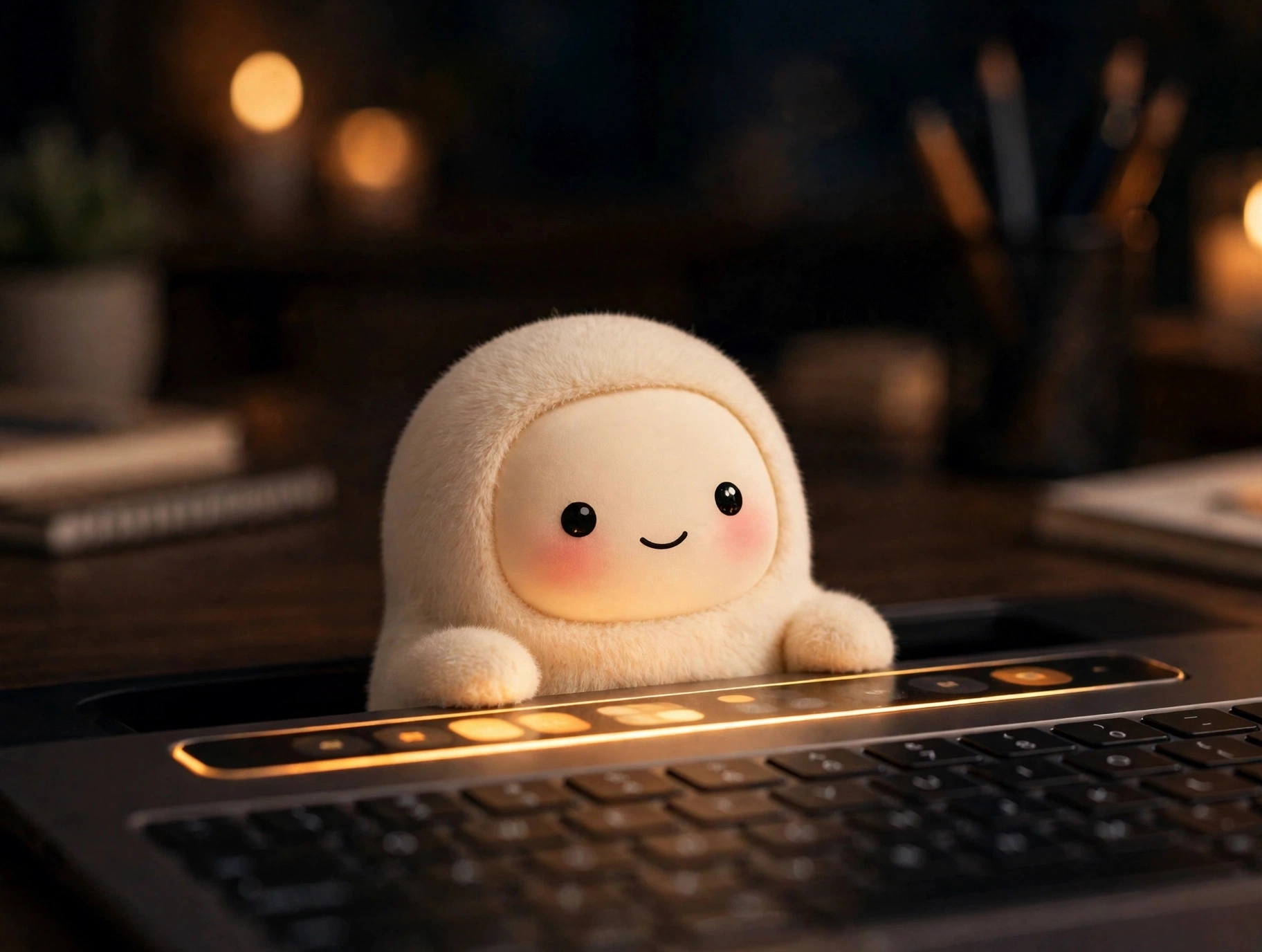
Paolo Rosson finally found a use for the Touch Bar.
“Finally found a use for the Touch Bar: my Muse lives in it now!” he wrote on X. “It wanders around, chases fireflies, and you can pet it. Tap it, ask out loud, and the answer runs along the bar.”
Alexandr Wang quote-posted it with two words: “muse touch bar !!”
A Tamagotchi for your keyboard
The 25-second demo is pure charm. The small cream-colored creature idles in the Touch Bar, drifting along the strip. Tap it and it wakes up. Rosson asks out loud, “Hey, how are you doing tonight?” and his transcribed question appears in the bar. A beat later, Muse’s answer scrolls through: “All good here! Just ticking along. What’s on your mind tonight?”
It’s the rare Touch Bar app that understands the assignment. The strip was always too small for real work and too awkward for real apps. But as a habitat for a tiny assistant you can pet? It finally makes sense. The whole thing plays like a Tamagotchi crossed with a voice assistant. Ambient, alive, and exactly one tap away.
Rosson’s screen shows the Muse Gadgets developer site behind the demo (the SDK and open-source firmware pages), and he confirmed the connection himself. When Anant Narayanan of Meta Superintelligence Labs asked if he used the Linux device SDK, Rosson replied: “Yes! I used the Linux Device SDK for the pairing and the encrypted session, i only swapped the Bluetooth part for a macOS one so my Mac can be the gadget. the voice and streamed replies i borrowed from how the ESP32 firmware does it. Really nice SDK to hack on!”
In other words: the Mac itself acts as the gadget, pairing over the SDK’s encrypted session with a macOS transport in place of Bluetooth, while voice input and streamed replies follow the ESP32 firmware’s approach.
The Gadgets wave keeps growing
This is the third community build on Muse Gadgets to break through in days. First an e-reader became a pocket display, then a 15-year-old PSP started answering questions out loud, and now a forgotten strip of OLED above a keyboard has a resident.
The pattern is becoming the story: Wang’s team put out open firmware and an SDK, and builders keep finding the weirdest possible homes for the assistant. Nobody asked for a Touch Bar pet. That’s precisely why it works.
 Muse Gadgets Brings Open-Source Hardware to the Muse Ecosystem
Open-source ESP32 firmware and a Linux SDK for building hardware that works with Muse.
Muse Gadgets Brings Open-Source Hardware to the Muse Ecosystem
Open-source ESP32 firmware and a Linux SDK for building hardware that works with Muse.
One honest limitation, same as the PSP build: Rosson described the approach but hasn’t shared source code or a build guide, so there’s no repo link and you can’t build one yourself yet. If he open-sources it, the Touch Bar might finally get its killer app, nine years late.