Tuya Releases an Open-Source Skill That Lets Muse Control Smart Home Devices
Tuya Cloud Devices lets Muse query and control lights, outlets, air conditioners, cameras, and sensors in a user's Tuya account through cloud APIs, using a single free API key and no local device keys or firmware changes.
 By Icarus4 min read
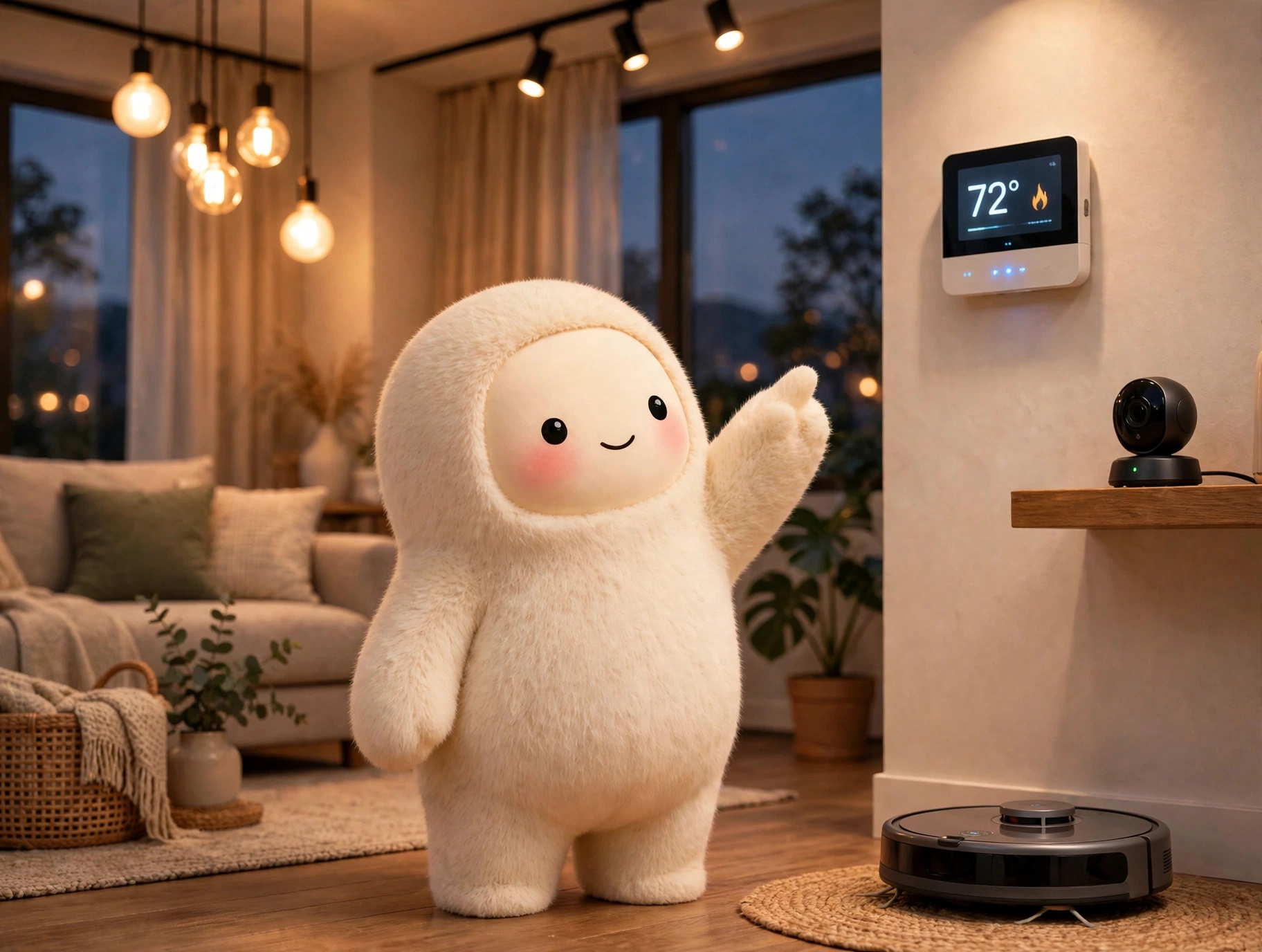
Tuya Smart has released Tuya Cloud Devices, an open-source skill that lets Muse query and control the smart devices in a user’s Tuya account using natural language. The skill works through Tuya’s cloud, so it needs no local device keys, no shared local network, and no firmware changes.
The skill, named gadget-tuya-cloud-devices, is adapted from tuya-smart-control, Tuya’s existing open-source AI skill. It is written as a plain Markdown file that follows the specification for Muse Gadgets, Meta’s open-source hardware program for Muse. Muse supplies the conversation and agent work, and Tuya supplies the device connectivity.
One Key, Read Before Writing
A single free API key connects the skill. Users apply for the key at tuya.ai, and the two characters after the key’s sk- prefix identify the account’s data center, so the skill selects the right endpoint from seven data centers without manual setup. That replaces the local-key route community solutions have used, where each device’s key had to be found separately and became invalid when the device was re-paired.
Before it sends a command, the skill reads the device’s Thing Model, Tuya’s standardized description of what a device can do, including its read and write permissions, value ranges, and increments. Reading that description first is what lets one skill handle different product categories without a separate adaptation for each model. If a device already has a model-specific or local-control skill, the request goes to that skill first.
Users can ask Muse to dim the living room lights, check whether the bedroom light is on, list the devices in a room, or rename a sensor. Muse can also report how much electricity an air conditioner used, capture a camera snapshot or a video of up to 60 seconds, and send event notifications to the user by SMS, voice call, email, or app push. Real-time automations, such as turning on a hallway light when a door opens, need an always-online Linux device running the Muse Gadgets Linux SDK, such as a Raspberry Pi, where Muse can deploy a resident program that receives device events and carries out trigger and action rules the user has confirmed.
Limits Built Into the Skill
The skill does not command a device that is offline, and it does not write to read-only properties. When several devices match a request, it lists their rooms and asks the user to confirm which one. After a command, it reads the device status back one to two seconds later and confirms the change only after checking that it took effect. Event notifications go only to the user and are spaced at least 30 minutes apart.
Some operations are left out entirely. Door lock control, live video, firmware upgrades, network configuration, and device pairing or removal stay in the Tuya app. The API key is used only in request headers, is not echoed in the conversation, and can reach only devices in the user’s own account.
Tuya reports that its platform covers more than 3,000 smart hardware categories across more than 200 countries and regions, and had more than 2.09 million registered AI developers as of June 30, 2026. Those figures describe Tuya’s platform, not devices verified to work with Muse.
The release also has a practical limit at launch. Unite.AI’s review of the underlying repository notes that every API endpoint currently available is labeled trial-phase, subject to rate limits and call quotas, and that the skill was submitted to Meta’s Muse Gadgets project as pull request #61 and is still in review. Until that submission is merged, the copy in Tuya’s own repository is the authoritative one.
Tuya Cloud Devices follows the same pattern as Muse’s other third-party connections, where a service becomes something the agent can act on inside the chat, as with the Expedia connector that went live this week and the connector platform that drew 1,500 developer applications in its first week. Here, the connection reaches devices already installed in the home rather than a booking or an account. Muse users can get the skill from Tuya’s GitHub repository, apply for a free API key at tuya.ai, and provide both to Muse.