Rezolve Ai demonstrates Muse ordering a coffee in agent-to-agent commerce debut
Rezolve Ai unveiled Rezolve Pay on October 9, 2026, with a demo video showing Meta's Muse interacting with a coffee shop's merchant-side agent to place an
 By Icarus3 min read

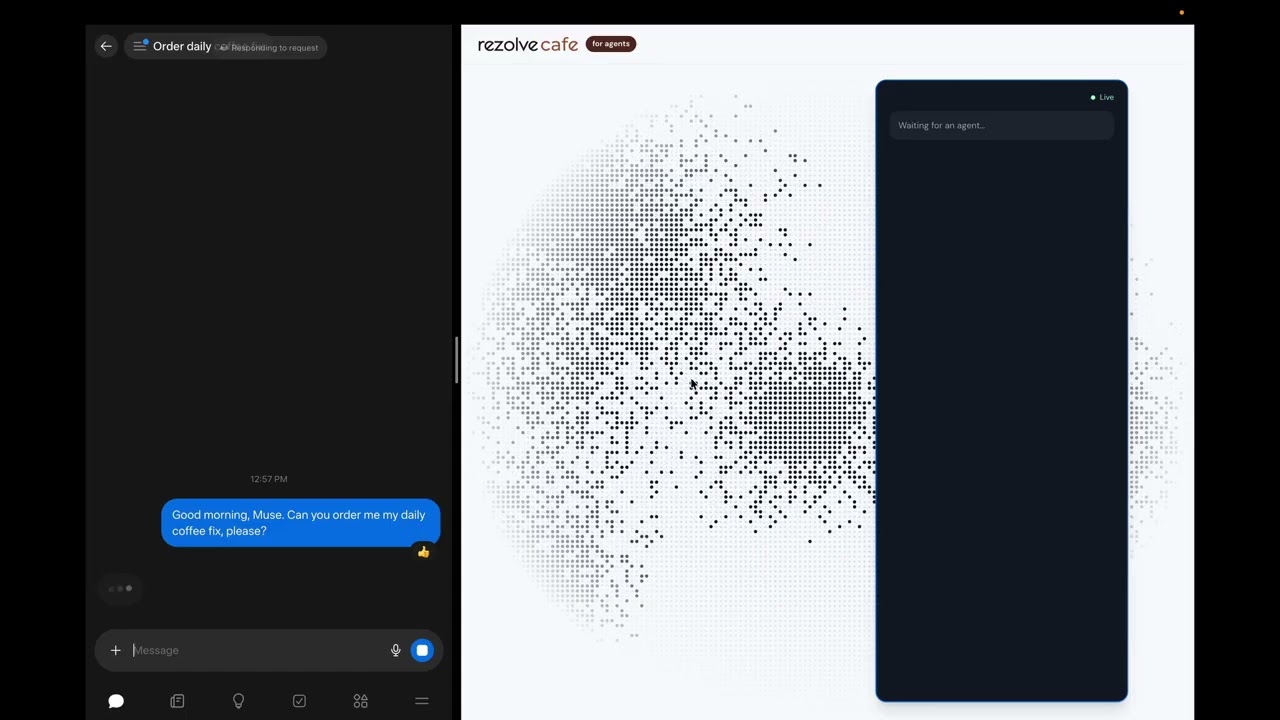
Rezolve Ai chose Meta’s Muse to carry the launch of its new agent-commerce infrastructure. The Nasdaq-listed company unveiled Rezolve Pay on October 9, 2026, a system meant to let consumer AI agents talk to merchant-side agents and finish purchases. The centerpiece of the announcement is a demo video in which Muse interacts with a coffee shop’s Rezolve Pay agent to place an online order for in-store pickup.
The order goes through end to end, and according to the release, the receipt identifies Muse as the agent that placed it. That is the point Rezolve wants merchants to notice: when an AI assistant buys, the retailer should be able to see which agent drove the sale and attribute the revenue to that channel.
Naga Samineni, CEO of Rezolve Pay, framed the launch at the company’s October 6 investor day: “Consumers will choose different assistants to shop for them and retailers need the ability to serve those customers whichever agent they use. While Muse is the example we have chosen, the Rezolve Ai opportunity is every AI agent and merchant.”
The Pitch: Don’t Scrape the Storefront, Talk to It
Rezolve Pay’s design sidesteps the way agents currently shop. Instead of Muse driving a browser through a retailer’s checkout page, the consumer’s agent converses with a merchant-side agent, and Rezolve’s proprietary payment rails (including digital-asset and stablecoin rails, per the release) connect that order to payment. Rezolve says the infrastructure combines payment orchestration with its own rails to speed up settlement and improve the economics of accepting payments for merchants.
The design is agent-agnostic. Rezolve Pay is meant to support transactions with any consumer AI agent through compatible merchant integrations; Muse was simply the example the company picked for the demo. Rezolve outlined three growth drivers for its investors: expanding merchant demand as more consumers shop through agents, deeper participation across the commerce journey from discovery to payment, and licensing the technology to platforms, banks, and payment networks.
Rezolve put numbers on the opportunity, citing McKinsey’s estimate that AI agents could mediate $3 trillion to $5 trillion of global consumer commerce by 2030, out of roughly $30 trillion in annual retail sales. Those are Rezolve’s figures, quoted from its own release.
Why This Matters for Muse
The demo lands at a moment when Muse’s ability to shop on the open web is both central to its pitch and under pressure. All Things Muse reported earlier this week on sites that block or challenge agents (Amazon’s block of Muse, plus friction at airlines, Yelp, eBay, and Zillow) and on Meta’s answer: an open standard effort for agent-to-agent communication in commerce announced with Sierra and retail partners.
Rezolve Pay is a second, parallel answer to the same problem: rather than an identity standard that helps websites distinguish legitimate agents from bots, it’s merchant-side infrastructure built to be transacted with. Meta’s own retail connectors (Best Buy, Gap, Sephora, Walmart, and Wayfair, announced at its Connect conference) are the direct-partnership version of the same bet: that shopping is the agent use case merchants can’t afford to sit out.
Whether merchants meet agents at the checkout, through connectors, or through new merchant-side agents like Rezolve’s will shape how much of Muse’s shopping promise works in practice. For now, the coffee order is the template the industry is testing: delegate the purchase, let two agents talk, pick up the coffee.